
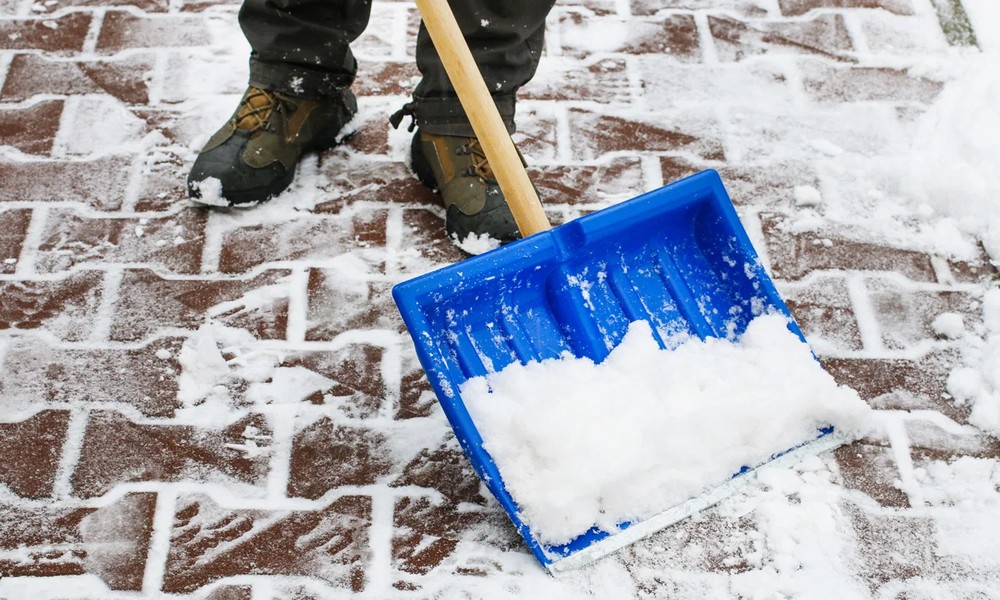
A clear sidewalk in front of a Newark Avenue restaurant. A patch of black ice in front of a Bayonne deli. A snowbank pushed across the walkway in front of a Hoboken pharmacy. The injuries that come from these conditions are predictable, and the medical bills that follow are expensive. What most pedestrians do not realize is that New Jersey draws a sharp line between residential and commercial property owners when it comes to who has to clear snow and ice, and that line decides whether a slip and fall claim has a chance or hits a wall before it starts. The Law Offices of Anthony Carbone has handled winter premises cases throughout Hudson County for more than 35 years, and the rule that governs these claims is one that surprises even experienced clients.
The Rule Itself: Stewart v. 104 Wallace Street
New Jersey’s Supreme Court drew the modern line in Stewart v. 104 Wallace Street, decided in 1981. Before that case, the common-law rule treated all sidewalk owners as essentially immune from liability for natural accumulations of snow and ice. Stewart changed that for one specific category. Commercial property owners now have an affirmative duty to maintain the sidewalks abutting their property in reasonably safe condition, including clearing snow and ice within a reasonable time after a storm.
That duty does not extend to residential property owners. A homeowner who fails to shovel the sidewalk in front of a single-family house in Jersey City Heights or Greenville is generally not liable to a pedestrian who slips, even if the local ordinance required the homeowner to clear it. Municipal ordinances impose fines for non-compliance, but they do not create civil liability to an injured walker. The civil liability piece is the part that matters in a personal injury claim.
A pedestrian who falls on ice in front of a commercial building has a real claim. A pedestrian who falls in front of a private residence usually does not. Telling those two situations apart is the threshold question in every winter slip and fall case in this state.
What Counts as Commercial Property
The line between residential and commercial is not always obvious. New Jersey courts look at the use of the property, not just its zoning classification. A single-family home occupied by the owner is residential. A storefront with a business on the ground floor is commercial. The harder cases live in between.
A two-family or three-family rental property in Hudson County is generally treated as commercial under post-Stewart case law if the owner is renting units for income. The reasoning is that the owner is operating a business on the property, which carries the same affirmative duty as any other commercial enterprise. A multi-family building with units leased on the open market falls into that category in most cases, even if the owner also lives in one of the units.
A mixed-use building, with a commercial tenant on the ground floor and apartments above, is commercial for sidewalk purposes. The same is true for a property held as an investment by an LLC or a trust, even if it sits next to single-family homes that would have no duty.
These distinctions matter because the first move from any defense lawyer in a winter case is to argue that the property does not meet the commercial definition. The factual record on ownership, occupancy, and use is what defeats that argument, and pulling the right documents through public records and discovery is part of the early work.
Black Ice Cases and the Notice Problem
Snow on a sidewalk is visible. Black ice is not. That difference creates a separate evidentiary issue in New Jersey premises cases. A commercial owner is liable for a hazardous condition only if the owner knew about it or, through reasonable inspection, should have known about it.
Black ice that formed overnight from refreeze of melted snow is the classic borderline case. A commercial owner who shoveled the sidewalk in the afternoon, watched the temperature drop after sunset, and did nothing about the predictable refreeze can be found liable. An owner facing a freak ice event before any reasonable inspection window had passed often is not.
The weather records become evidence in these cases. Hourly temperature data from the National Weather Service stations at Newark Liberty or Teterboro, precipitation logs from the storm that created the underlying conditions, and the timeline of when the property was last cleared all factor into the notice analysis. Building those records into a claim takes time, and pulling the surveillance footage from neighboring businesses before the retention window expires is often what locks in the timeline.
How The Law Offices of Anthony Carbone Builds These Claims
A winter slip and fall case starts with the property records. The deed and the tax assessment indicate ownership. The certificate of occupancy and the most recent rent registration filings indicate use. The municipal records often reveal whether the property is held by an investment LLC or by an owner-occupant.
From there, the case moves to the maintenance record. Snow removal contracts with vendors, internal management memos about ice control, and any prior complaints or incidents at the same location all carry weight. A property with three prior falls in two winters at the same spot looks very different to a jury than a property with a clean history.
The medical record is the third pillar. A serious injury from a winter fall, including hip fractures, concussions, wrist fractures, and lower back injuries, has to tie cleanly to the impact on the ice. The defense will look hard for any prior history of the same body part. Building the causation argument with the treating physicians, rather than leaving it to the insurance examiner, is a major part of the work.
The Next Step If You Were Hurt on an Icy Sidewalk
A pedestrian who slipped on snow or black ice in front of a commercial property anywhere in Jersey City, Hoboken, Bayonne, North Bergen, or the rest of Hudson County should not assume the case is unwinnable just because the local rule sounds confusing. The Law Offices of Anthony Carbone offers a free consultation to walk through the property’s status, the available evidence, and the realistic value of the claim. Reach out before the weather records get harder to pull and the surveillance footage is overwritten.